

When you look across the vast Mongolian steppe, it can feel timeless—as if the endless horizons and roaming herds have remained unchanged for centuries. At the heart of this landscape is one of the world’s last remaining nomadic cultures.
For Mongolian herders, nomadism isn’t a historical reenactment; it is a living, highly adapted way of life. Central to this survival strategy is seasonal migration (нүүдэл)—the art of moving camps with the changing seasons to protect livestock, preserve pastures, and stay tuned to the rhythm of nature.
The Four-Season Rhythm of Pastoral Mobility
Mongolia experiences dynamic seasonal shifts, with winter temperatures dropping below -30°C (-22°F) and summer days reaching warmth across open valleys. To adapt, nomadic families move an average of 2 to 4 times a year:
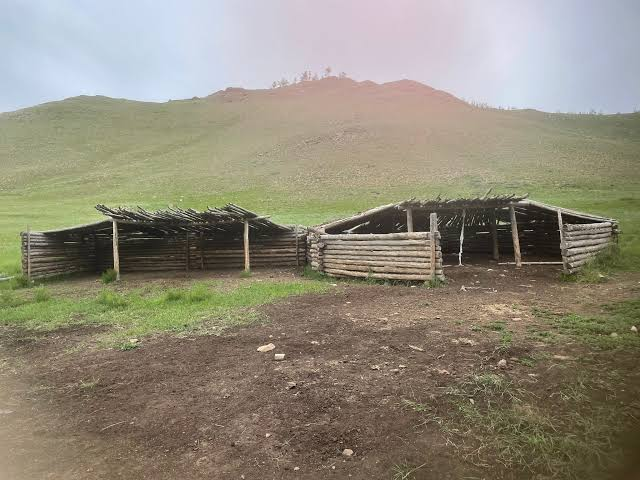
1. Spring (Хаваржаа) – Renewal & Shelter
- Focus: Survival and newborn animal care.
- Location: Sheltered valleys, mountain foothills, or rocky outcrops that block cold northern winds.
- The Vibe: Spring is the most fragile season. Herders stay close to winter shelters to protect newborn lambs, kids, calves, and foals from harsh spring blizzards.
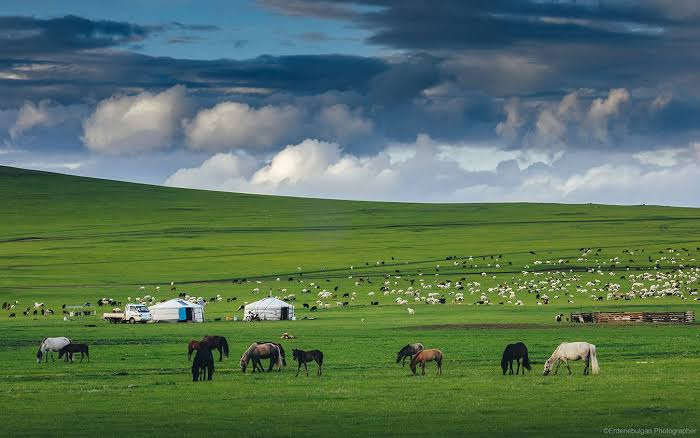
2. Summer (Зунжаа) – Abundance & Fattening
- Focus: Milk production, fattening livestock, and socializing.
- Location: Open pastures near rivers, streams, and lakes.
- The Vibe: Summer is a joyful, busy season. Animals graze freely on rich grasses while families process dairy into airag (fermented mare’s milk), aaruul (dried curd), and butter.
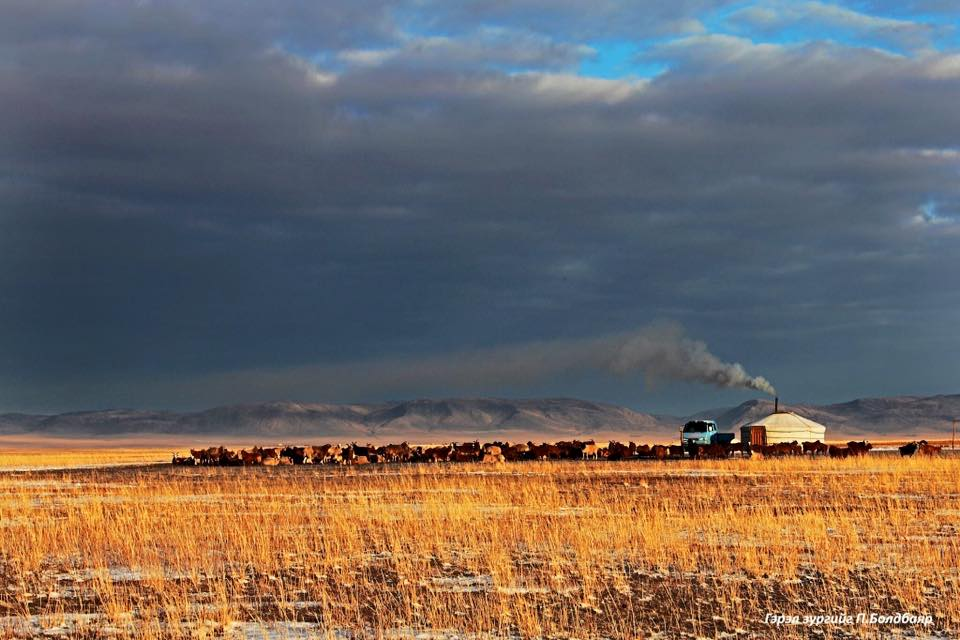
3. Autumn (Намаржаа) – Preparation & Harvest
- Focus: Preparing for the long winter ahead.
- Location: Foothills with rich grazing land to maximize animal weight before cold sets in.
- The Vibe: Autumn is a period of intense work. Herders comb cashmere, slaughter livestock for winter meat reserves (цүвц/үц), dry curds, and repair winter shelters.
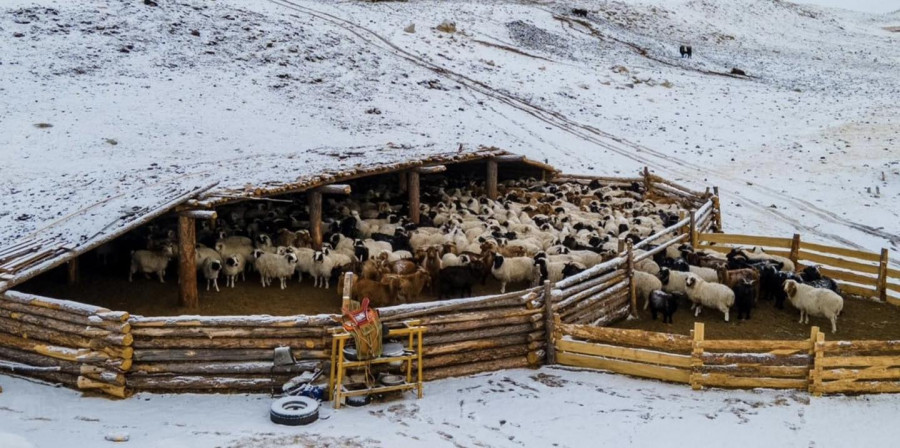
4. Winter (Өвөлжөө) – Enduring the Cold
- Focus: Protecting herds from extreme freezing weather.
- Location: Deep mountain valleys or tree-lined ridges that shield against wind, where snow cover isn’t too deep for animals to dig down to feed.
- The Vibe: Winter camps often feature sturdy wooden corrals (өвөлжөөний хашаа) built over generations. Families stay cozy around fuel-burning stoves inside thick felt gers.
How Migration Works Today: Tradition Meets Modernity
While the underlying philosophy of moving with livestock remains ancient, modern tools have blended seamlessly into traditional pastoral life:
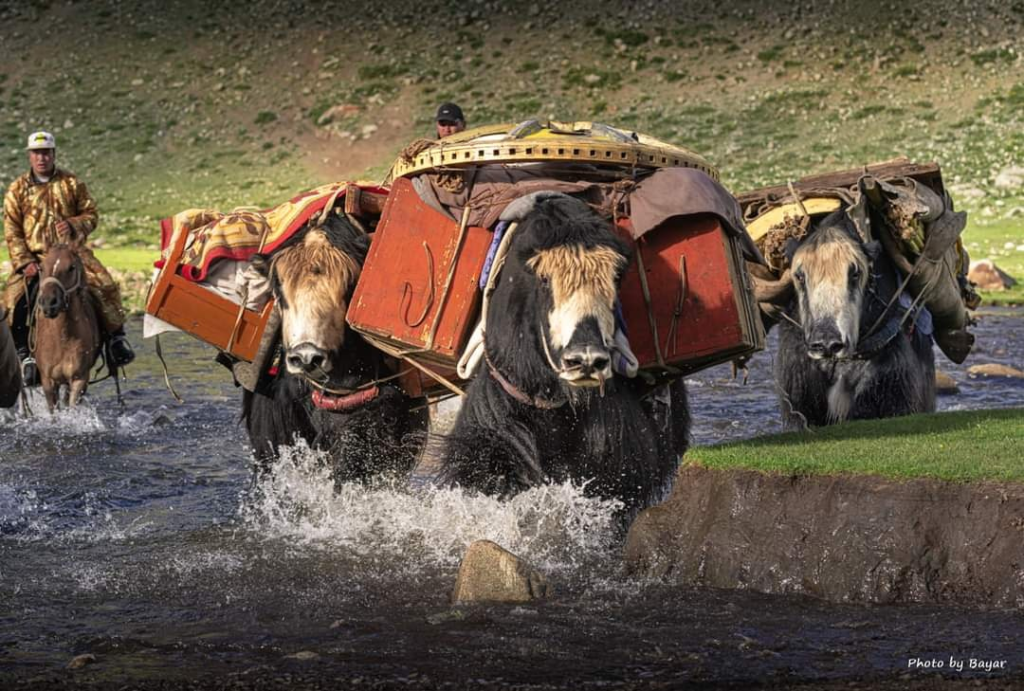
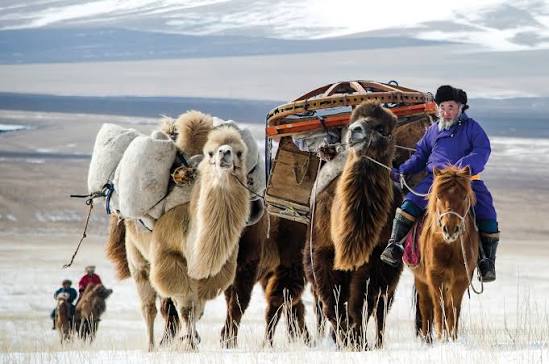
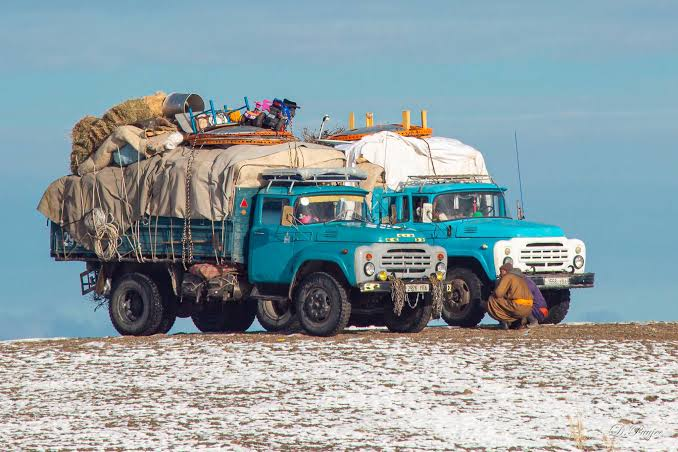
- Trucks Alongside Camels: In remote mountain areas like the Altai, families still load gers onto camels or yak carts for steep passes. However, along the steppe, many herders now transport gers and household items using Russian heavy trucks or utility vehicles.
- Motorbikes for Herding: Horses remain a symbol of pride and high culture, but motorbikes have become indispensable everyday tools for gathering livestock quickly across large distances.
- Solar & Satellite Connectivity: Clean solar panels power LED lighting, mobile phones, satellite TVs, and even Starlink internet, keeping remote nomadic homesteads connected while living far off the grid.
Why Pastoral Nomadism Matters for Sustainable Tourism
Nomadic migration is essential to grassland management. Moving pastures prevents overgrazing, allowing fragile steppe ecosystems time to regenerate.
For travelers, witnessing or participating in a migration offers an unmatched, authentic connection to human heritage:
- Cultural Immersion: Learn how a ger can be dismantled in under an hour, packed efficiently, and rebuilt in a new location by nightfall.
- Unplugged Adventure: Experience life lived in total harmony with animal herds, shifting weather, and open spaces.
- Impactful Travel: Visiting nomadic families directly supports local livelihoods, preserving this tangible cultural legacy for future generations.
Experience the Migration with Us
Are you ready to witness one of humanity’s greatest living nomadic journeys? Join our seasonal expedition tours to travel alongside herding families during their autumn or spring migrations, experience warm steppe hospitality, and see Mongolia through local eyes.