

To much of the Western world, the name Genghis Khan conjures images of a ruthless barbarian warlord leading wild horsemen across the Asian steppes. But ask anyone in Mongolia today, and you will hear a vastly different story: that of a visionary leader, a legal innovator, the father of modern globalization, and the founding patriarch of a nation.
So, who was Genghis Khan really? What is the true history behind the myth, and why does his legacy still shape modern Mongolia—and the rest of the world?
Here is the compelling true story of the man born as Temüjin, and how you can trace his steps in Mongolia today.
From Orphan Exile to Universal Ruler: The Early Life of Temüjin
Long before he was granted the title of Genghis Khan (“Universal Ruler”), he was simply Temüjin, born around 1162 near the Burkhan Khaldun mountain in northern Mongolia.
His early life was defined by extreme hardship:
- Tragedy at a Young Age: His father, Yesugei, a prominent tribal leader, was poisoned by rival Tatars when Temüjin was just nine years old.
- Exile and Survival: Deserted by his own clan, Temüjin’s family was reduced to extreme poverty, surviving on wild fruits, roots, and small rodents in the harsh Mongolian wilderness.
- Kidnapping and Betrayal: He was later captured and enslaved by rival clans, and his young wife, Börte, was kidnapped by the Merkit tribe—an event that launched his first major military campaign to rescue her.
Through relentless determination, strategic brilliance, and an unmatched ability to build fierce loyalty, Temüjin did what no nomadic leader had ever accomplished: he united the warring nomadic tribes of the Eurasian steppe under one single nation in 1206.
5 Surprising Facts About Genghis Khan That History Books Missed
Beyond the battlefield, Genghis Khan was a revolutionary state builder whose policies were centuries ahead of his time.
1. Meritocracy Over Bloodlines
Unlike European or Asian feudal lords who relied on noble lineage, Genghis Khan promoted officers based purely on loyalty and competence. One of his top generals, Jebe, was originally an enemy archer who shot Genghis Khan’s own horse in battle. Instead of executing him, Genghis Khan made him a commander.
2. Absolute Religious Freedom
Genghis Khan established complete freedom of religion throughout his empire. Christians, Muslims, Buddhists, Shamans, and Daoists practiced freely under his rule without fear of persecution—a revolutionary concept in the 13th-century world.
3. Creation of the First International Postal System (The Yam)
To govern a vast realm, he established the Yam (Örtöö)—a lightning-fast network of relay stations where messengers could ride hundreds of miles a day on fresh horses. It was the world’s first global communication network.
4. Legal Protections for Women & Immunity for Diplomats
Under the Yassa (the Great Law code), kidnapping women, selling brides, and spousal abuse were banned. He also established the rule of diplomatic immunity—meaning ambassadors were strictly protected, a foundational rule of modern international diplomacy.
5. Diplomacy Through Trade (Pax Mongolica)
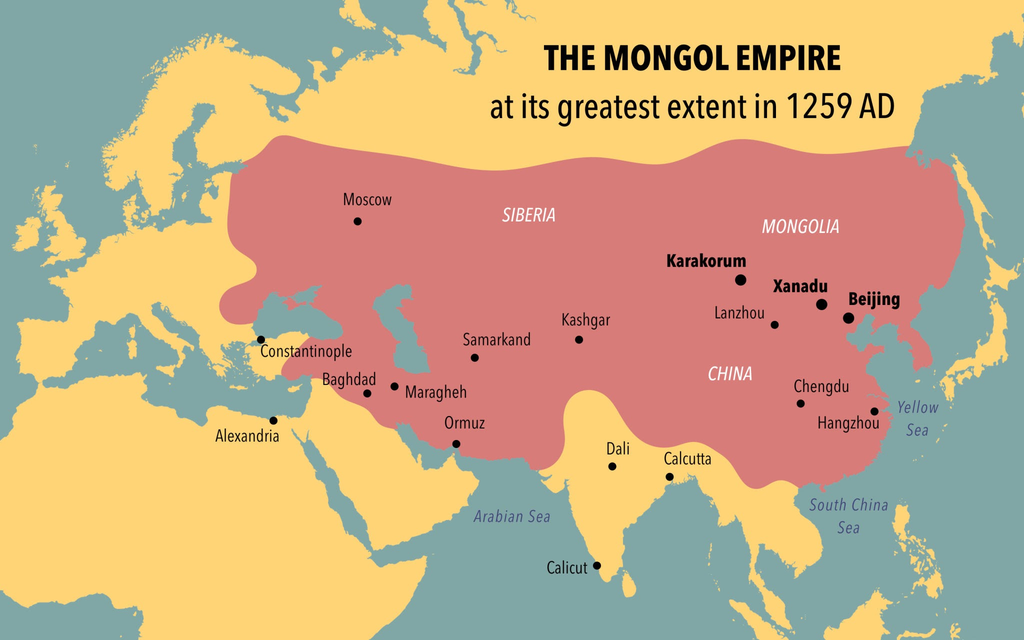
The rise of the Mongol Empire secured the entire length of the Silk Road, leading to an unprecedented era of peace known as Pax Mongolica. For over a century, a merchant could walk safely from Eastern Europe to the Pacific Ocean carrying a gold ingot on his head without being robbed.
How Did Genghis Khan Die, and Where Is His Tomb?
One of history’s greatest unsolved mysteries is the death and burial site of Genghis Khan.
He passed away in August 1227 at around 65 years of age during a military campaign in the Western Xia kingdom. While popular legends attribute his death to battle wounds or falling off his horse, the exact cause remains unknown.
Per his strict instructions, he was buried in complete secrecy:
- According to Mongolian legend, his funeral procession slaughtered anyone they encountered along the route to keep the location secret.
- A river was allegedly diverted over his burial place, or hundreds of horses trampled the area until all traces were erased.
- Today, historians believe his tomb lies hidden deep within the sacred Burkhan Khaldun mountain range in Khentii province—a protected UNESCO World Heritage area forbidden to unauthorized visitors.
Experience the Great Khan’s Legacy in Modern Mongolia
You cannot understand the true story of Genghis Khan through books alone—you have to experience the vast, open steppes and nomadic spirit that forged him.
When you visit Mongolia, here are the top places to connect with the Great Khan’s history:
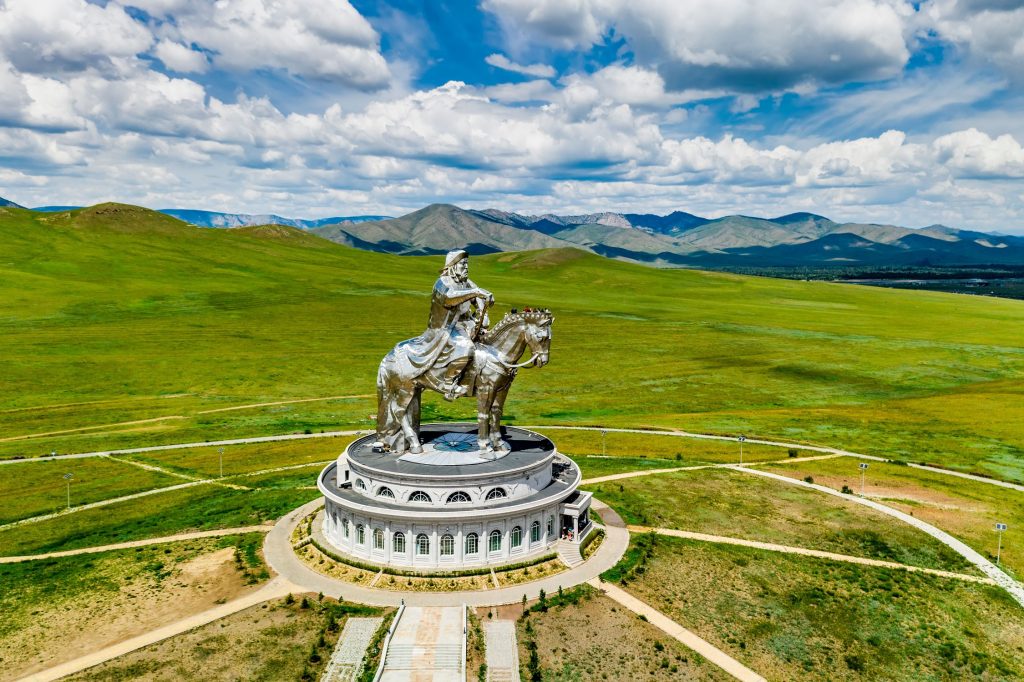
- The Genghis Khan Equestrian Statue (Tsonjin Boldog): A breathtaking 40-meter (130 ft) stainless-steel statue rising out of the steppe where Temüjin according to legend found a golden whip.
- Chinggis Khaan National Museum in Ulaanbaatar: A world-class 9-story museum housing thousands of artifacts from the Mongol Empire and ancient nomadic states.
- Karakorum & Erdene Zuu Monastery: Explore the ruins of the ancient capital of the Mongol Empire founded by Genghis Khan’s son, Ögedei.
- Burkhan Khaldun Mountains: Take a cultural expedition through the pristine wilderness of Khentii province, the birthplace of Temüjin.